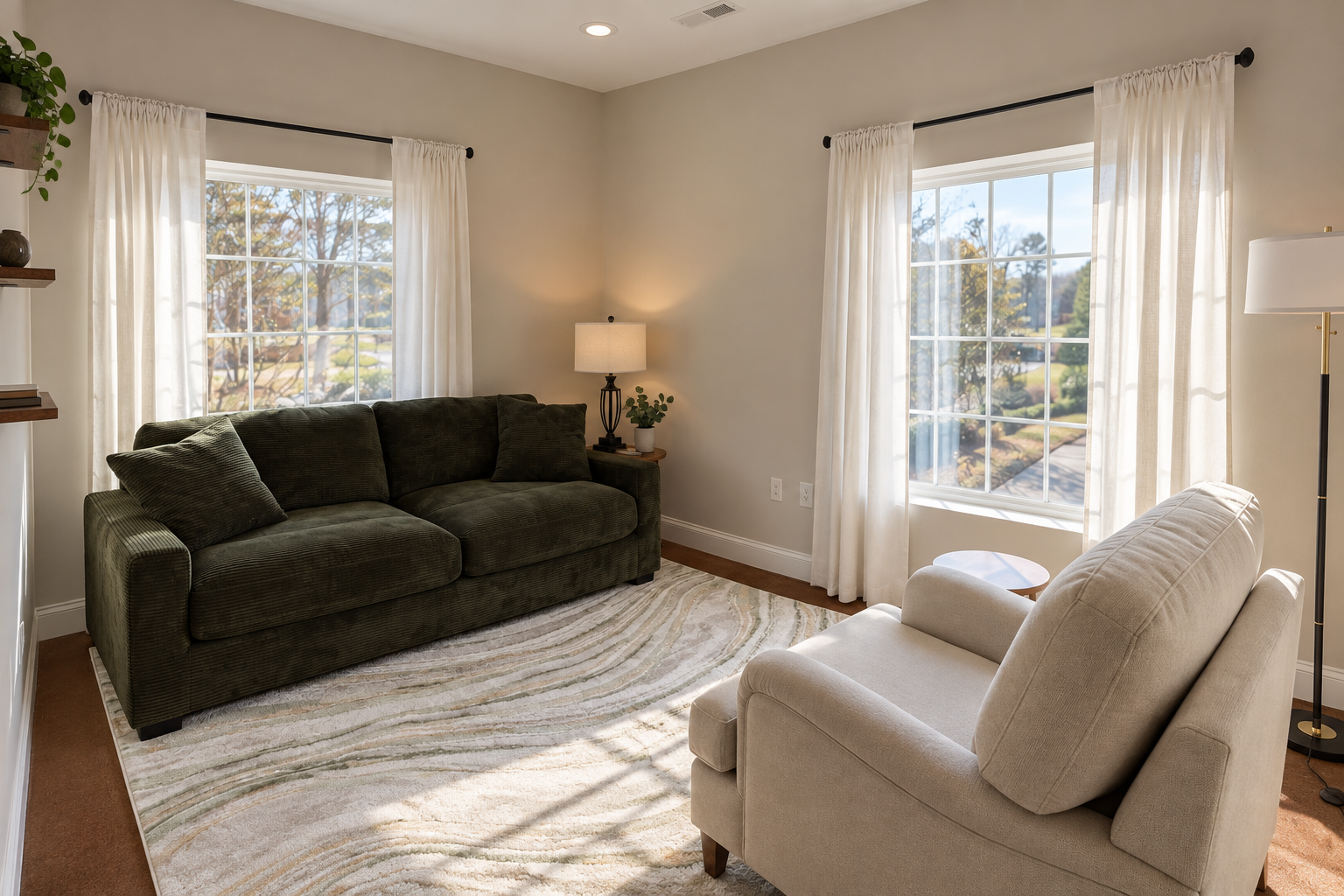
Find steadiness in the uncertainty.
Therapy for Anxiety
Sound like you?
Your mind won’t shut off
You replay conversations, anticipate what could go wrong, and struggle to quiet the constant thinking.
You’re always preparing for something
Even when things are going well, part of you is waiting for the next problem to appear.
You second-guess yourself
Decisions become exhausting as you analyze possibilities, seek reassurance, or worry about making the wrong choice.
You avoid things that make you anxious
Certain conversations, situations, decisions, or experiences start feeling easier to put off altogether.
Your body has trouble settling down
Tension, restlessness, a racing heart, difficulty sleeping, or that persistent feeling of being on edge can follow you throughout the day.
Anxiety is taking up too much space
You may still be functioning well on the outside, but internally, managing anxiety requires more energy than anyone realizes.
How WE can help
What if you didn't have to get rid of anxiety before you could move forward?
Anxiety naturally pulls us toward control. We try to solve the thought, eliminate the feeling, avoid the situation, find certainty, or convince ourselves that everything will be okay.
Sometimes that works for a little while. But the harder we work to avoid anxiety, the more our lives can begin to revolve around it.
It can be a lot like struggling in quicksand. Every instinct tells you to fight harder and get away, but all that struggling can actually pull you deeper.
Our approach to anxiety therapy is heavily influenced by Acceptance and Commitment Therapy (ACT). Instead of making the absence of anxiety the goal, we help you develop a different relationship with it. One where uncomfortable thoughts, feelings, and physical sensations can exist without automatically deciding what you do next.
Anxiety doesn't have to disappear for life to get bigger.
Imagine your awareness as the surface of a calm lake.
Life drops a stone into the water: a difficult conversation, an uncertain future, a physical sensation, an intrusive thought. Ripples follow. That's what water does.
We often create more suffering in what happens next. We become afraid of the ripples. We judge them, resist them, analyze them or desperately try to make them stop. Before long, we've created waves around something that might otherwise have been allowed to rise and fall naturally.
Therapy can help you notice that process as it's happening.
Through mindfulness, body awareness and cognitive defusion, we practice creating some space between having a thought or feeling and automatically reacting to it. You learn to experience anxiety without treating everything it says as a fact, a warning, or a command.
Everything we experience changes. Thoughts change. Sensations change. Emotions change. Anxiety changes.
We don't have to force the water to become still.

“The goal isn’t a life without anxiety. It’s a life that isn’t organized around anxiety.”
What we’ll work on
You’ll walk away with —

01
A different relationship to anxiety
Learning to notice uncomfortable thoughts, feelings, and sensations without immediately needing to control or escape them.
02
More freedom from overthinking
Creating distance from anxious thoughts so they become something you can observe rather than something you have to obey.
03
Greater awareness of your body
Recognizing how anxiety shows up physically and learning to stay grounded and present when discomfort arises.
04
More confidence acting on what matters
Making choices based on your relationships, values and the life you want to build, not simply on what anxiety tells you will feel safest.

Sound like you?
You don't need to wait until the anxiety is gone to start living differently.
Anxiety may still show up. The goal isn't to never feel uncertain, uncomfortable, afraid, or overwhelmed again.
The work is learning that those experiences don't have to determine what happens next.
Over time, the question can shift from “How do I make this feeling go away?” to “How do I want to respond while this feeling is here?”
That shift creates room to have the conversation, make the decision, set the boundary, take the risk, stay present, or move toward something meaningful—even when anxiety comes along for the ride.